For many years, I led winter photography workshops in Lofoten, Norway.
Lofoten is a visually spectacular place, with dramatic mountains, rugged coastlines, fishing villages, cabins, docks, and constantly changing Arctic light.
For photographers interested in technical cameras, it is also an ideal place to become comfortable with the technical-camera workflow in the field.
Many compositions include man-made structures, so rise, fall, and shift movements are often useful for controlling perspective and refining composition.
At the same time, many shooting locations are relatively accessible, so participants can work seriously with camera movements and medium-format systems without having to carry heavy equipment over long distances.
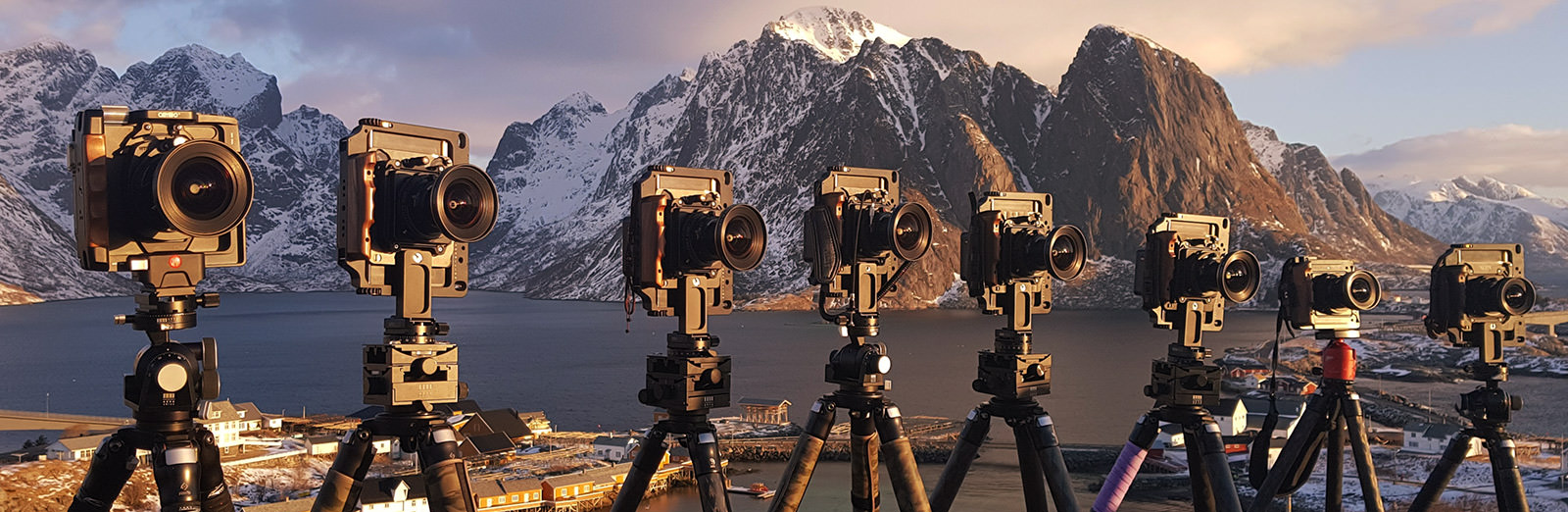
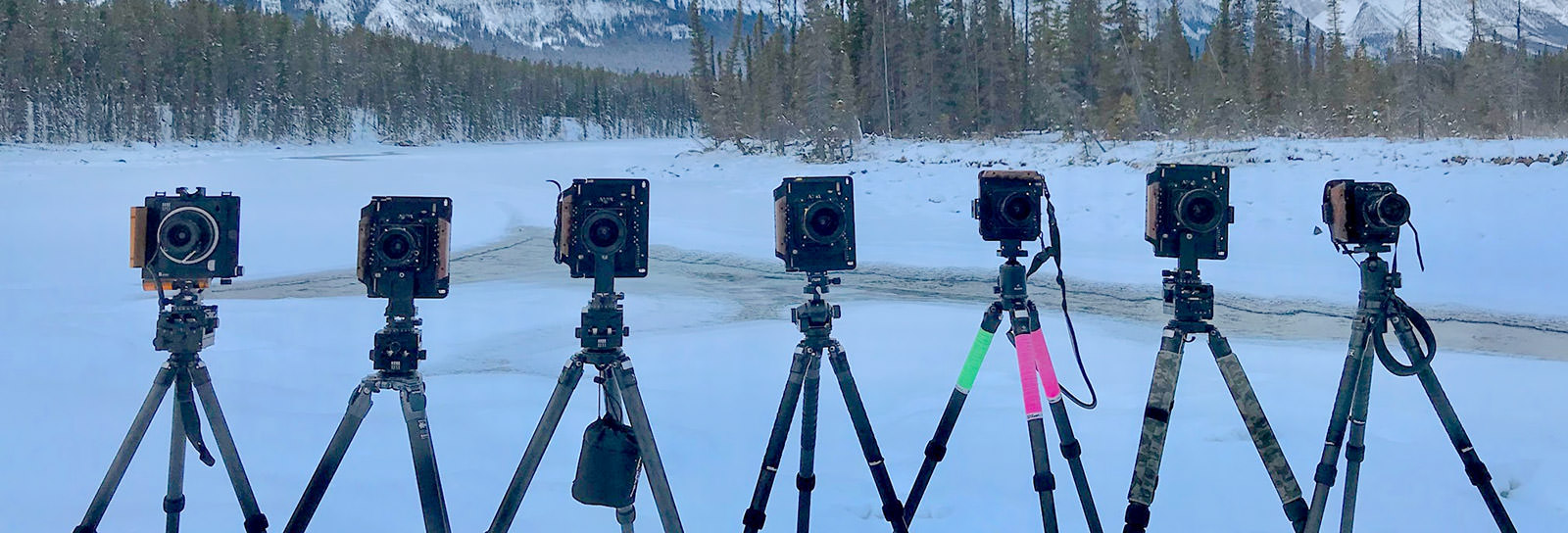
This image was taken during my 2018 Lofoten workshop.
It shows just how popular technical cameras were among the participants: we had seven ALPA cameras and one Cambo camera in the group.
Why Medium Format?
To put it simply: we want image quality better than the one provided by smaller sensor cameras.
It’s true that cameras don’t create artwork. Photographers do.
However, in landscape photography, the size of the final presentation has a huge impact on viewer experience.
It’s true that many people only view landscape photographs on computer screens or even on tiny phone screens.
However, once they see high quality big prints in a gallery, they will immediately understand that it is a completely different experience.
Generally speaking, if all other things are equal, the larger the prints are, the stronger the visual impact will be, at least for "grand landscape" types of work.
Of course, this is a general rule and you can always find exceptions.
For example, some minimalist landscape photographs, which do not have many details, look elegant inside a small picture frame but often are terrible on a 2-meter print.
Large prints, those over two to three meters,
require image quality only a digital medium format camera can provide (large format film cameras also work,
but let us focus on digital imaging only in this page.)
You need to know if you really need all the megapixels or not.
If you only shoot for magazines, for example, then 35mm DSLR cameras are perfectly fine.
You will not see a major difference in image quality between a good 35mm camera and a high-end medium format camera,
even on double page spreads. These prints are too small to see the advantage of the latter.
Some might argue about the existence of a “medium-format look.” As a landscape photographer, I am not sure whether such a thing is real, useful,
or mostly a matter of perception.
In any case, I prefer to focus on measurable and practical advantages: resolution, dynamic range, lens quality, movements, workflow, and final print quality.
Medium Format (MF) is used to refer to film formats that are larger than the ubiquitous 35mm (24X36mm) film. Typical medium formats include 645(6x4.5cm), 6x6 (6x6 cm), 6x7, 6x9, 612 (6x12cm), and 617 (6x17cm). Their sizes are much larger than that of 35mm film, but smaller than Large Format (LF) film formats such as 4X5 (inch) and 8x10 (inch), hence the name "medium format".

Digital Medium Format and Its Advantages
In the era of digital photography, digital MF refers to cameras with a sensor that is larger than that of a 35mm (full-format) DSLR camera. For example, the sensors used by Phase One 3100/4150 are of 54x40mm (digital 645 format), which are 2.5 times larger than the ones in 35mm DSLR cameras. Compared to smaller sensors using the same generation of technology, larger sensors typically bring better resolution, better dynamic range, and better color depth.
There are no commercially available large format digital sensors. The cost of manufacturing sensors increases exponentially as the size of them increases. 54x40mm sensors, which are already prohibitively expensive for most users, are the biggest on the market. On the other hand, modern digital MF systems offer incredible image quality. The best of them exceed the image quality of 4x5 large format film, and are closing the resolution gap between the digital capture and 8x10 large format film. With the easy stitching capability of a MF tech camera, it is possible to very easily produce a digital image that matches or exceeds the resolution of 8X10 film.
On the other hand, the dynamic range, the reliability, the weather resistance capabilities, and ease of workflow of digital far exceeds that of 8x10 film systems.
In other words, digital MF completely changes the game of high-end photography by removing most of the severe inherent limitations of large format cameras.
For the first time, we can capture a much wider variety of sceneries and images, from starscapes to innovative wide-angle compositions, while still maintaining the exceptionally high image quality that only large format cameras could provide a few years ago.
However, digital MF means much more than just sensor sizes. In real world photography, we are also talking about very different lens qualities, different ways to photograph, and very different workflows and mindsets. In other words, it is pointless to just compare sensor sizes and declare "mine is bigger than yours". We need to look at systems as a whole and compare them.
Automatic Medium-Format Cameras
Over the years I have used several automatic medium-format camera systems, including the Phase One XF and, more recently, the Fujifilm GFX 100S and GFX 100S II.
The Phase One XF is a high-end digital medium-format SLR system built around Phase One digital backs.
It offers superb image quality, excellent lenses, deep integration with Phase One backs, and a much more familiar, automated shooting experience than a technical camera. In many ways, operating the XF feels closer to using a high-end 35mm camera: you compose through a viewfinder, use autofocus when appropriate, control the camera from the body, and work with a relatively conventional photographic workflow.
For landscape photography, however, the XF system has several important limitations.
The most significant one, in my opinion, is the lack of truly wide-angle lens options suitable for grand landscape work.
The system also becomes large and heavy very quickly, especially when used with the best lenses and a high-end digital back.
For studio, commercial, portrait, fashion, or controlled-location work, these compromises may be perfectly acceptable. For long-distance wilderness landscape photography, they become much harder to justify.
In recent years I have used the Fujifilm GFX 100S and GFX 100S II extensively in real-world landscape work.
These cameras are fast, convenient, highly automated, and surprisingly robust in difficult outdoor conditions.
Their image quality is also clearly better than that of the best 35mm digital systems, especially when large prints or extensive post-processing are involved.
For many photographers, modern mirrorless medium-format systems such as the Fuji GFX and Hasselblad X cameras are excellent tools.
They are relatively portable, easy to operate, and well suited for situations where speed, automation,
and reliability matter: aerial work, handheld shooting, rapidly changing weather,
or hostile field conditions where a technical camera would be too slow, too exposed, or too risky to use.
Cost is also an important part of the equation. A Fuji GFX or Hasselblad X system is not inexpensive,
but it costs only a fraction of a top-tier technical-camera ecosystem built around a Phase One IQ4 150MP digital back, an ALPA body,
and several Rodenstock HR lenses. The ALPA body itself is not the main problem.
The real cost comes from the digital back and the lenses. Once you add an IQ4 150MP back and a set of high-end Rodenstock lenses,
the total system cost enters a completely different world.
These systems are not necessarily mutually exclusive.
In fact, many photographers who use ALPA or other high-end technical-camera systems also carry an automatic camera system,
whether it is a Fuji GFX, a Hasselblad X, or a high-end 35mm camera.
Most serious ALPA users I know work this way. The technical camera is used when ultimate image quality, movements, stitching precision,
and careful composition matter most. The automatic camera is used when speed, weather sealing, handheld operation, autofocus,
portability, or risk management matters more.
The reverse is not necessarily true: many GFX, Hasselblad, or 35mm users may never need or want a technical camera.
For example, the image below was made with the Fujifilm GFX 100S and the Fujinon GF 20-35mm f/4 R WR lens along the rugged coast of northern Spain,
where large waves repeatedly crashed over the rocks and sea spray hit both me and the camera several times.
Scenes like this are exactly what many landscape photographers are drawn to.
They reveal the raw power of nature in a way that calm and comfortable locations rarely can.
However, they also place real demands on the equipment.
The camera must be fast enough to react to constantly changing waves, robust enough to tolerate sea spray,
and manageable enough that the photographer can protect it, wipe it, reposition quickly, and keep shooting.
A technical camera with an IQ4 back and a Rodenstock lens would have offered higher ultimate image quality,
but it would have been much slower to operate, far more difficult to protect, and vastly more expensive to risk in such conditions.
The GFX 100S is weather-sealed and fast to handle, which made it a more practical tool for this situation.
The risk was still real, and I would certainly not treat the camera as disposable.
But compared with exposing a Phase One back and a technical-camera lens to salt water and wave spray,
the GFX represented a much more acceptable and rational field risk.
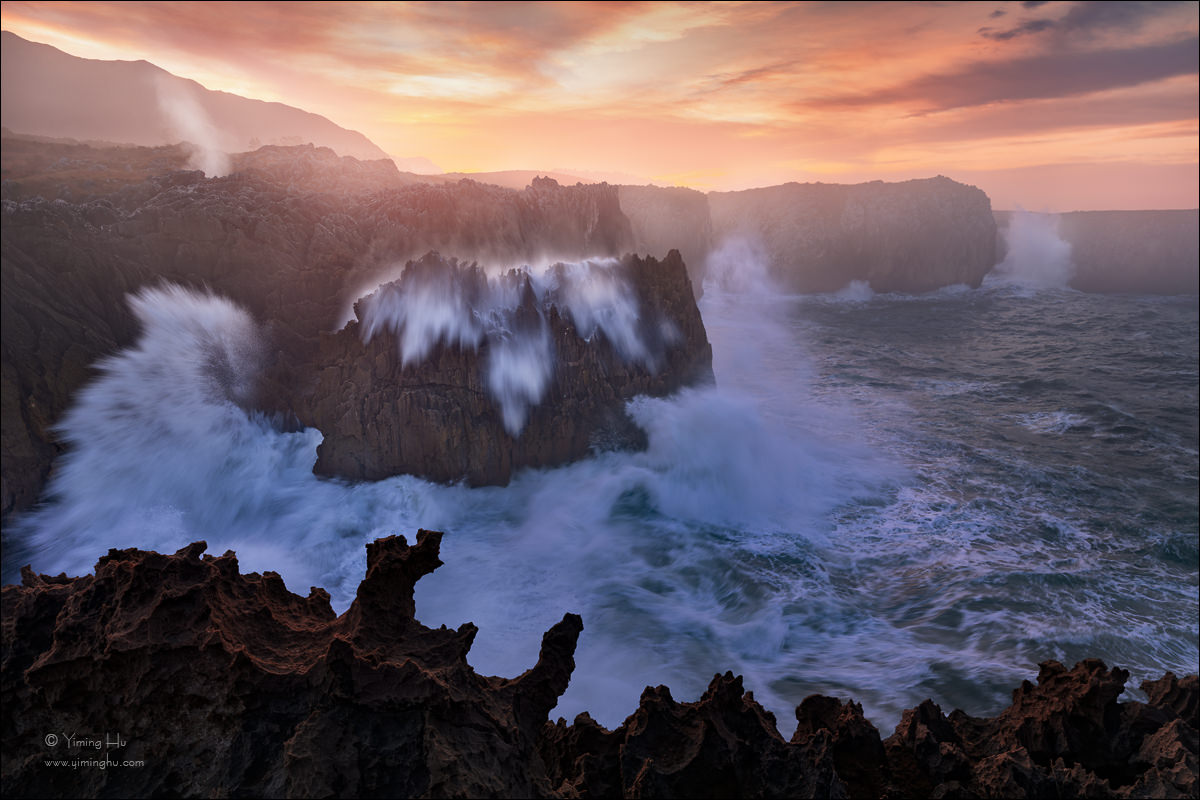
Crushing Waves Over Bladed Rocks, northern Spain. I made this image with the Fujifilm GFX 100S and Fujinon GF 20-35mm f/4 R WR lens. In hostile field conditions like this, a fast, weather-sealed, automated medium-format camera can be a more practical choice than a technical camera with a digital back.
This does not mean that the GFX or Hasselblad X system matches a top-tier technical-camera system in ultimate image quality.
In my own work, an IQ4 150MP digital back combined with Rodenstock HR lenses is still visibly superior, especially in the corners,
with movements, and in very large prints. Therefore, I will not discuss the Fuji or Hasselblad mirrorless systems in detail here.
The point is simply that modern automatic medium-format cameras have become extremely capable and useful.
They are not the subject of this article because this article is mainly about top-tier digital medium-format technical-camera systems.
Why Medium-Format Technical Cameras?
The most important limitation of automatic medium-format cameras, including the Phase One XF, Fuji GFX, and Hasselblad X systems, is that they do not provide the same technical movements that make technical cameras uniquely powerful for landscape photography.
Technical movements are not just exotic features for architecture photographers. In landscape work, they solve several practical problems that ordinary cameras cannot solve as cleanly: controlling the plane of focus, avoiding perspective distortion, and creating stitched images without rotating the camera. These capabilities are the main reason I use technical cameras.
There are three types of movements:
- Tilt/Swing:
-
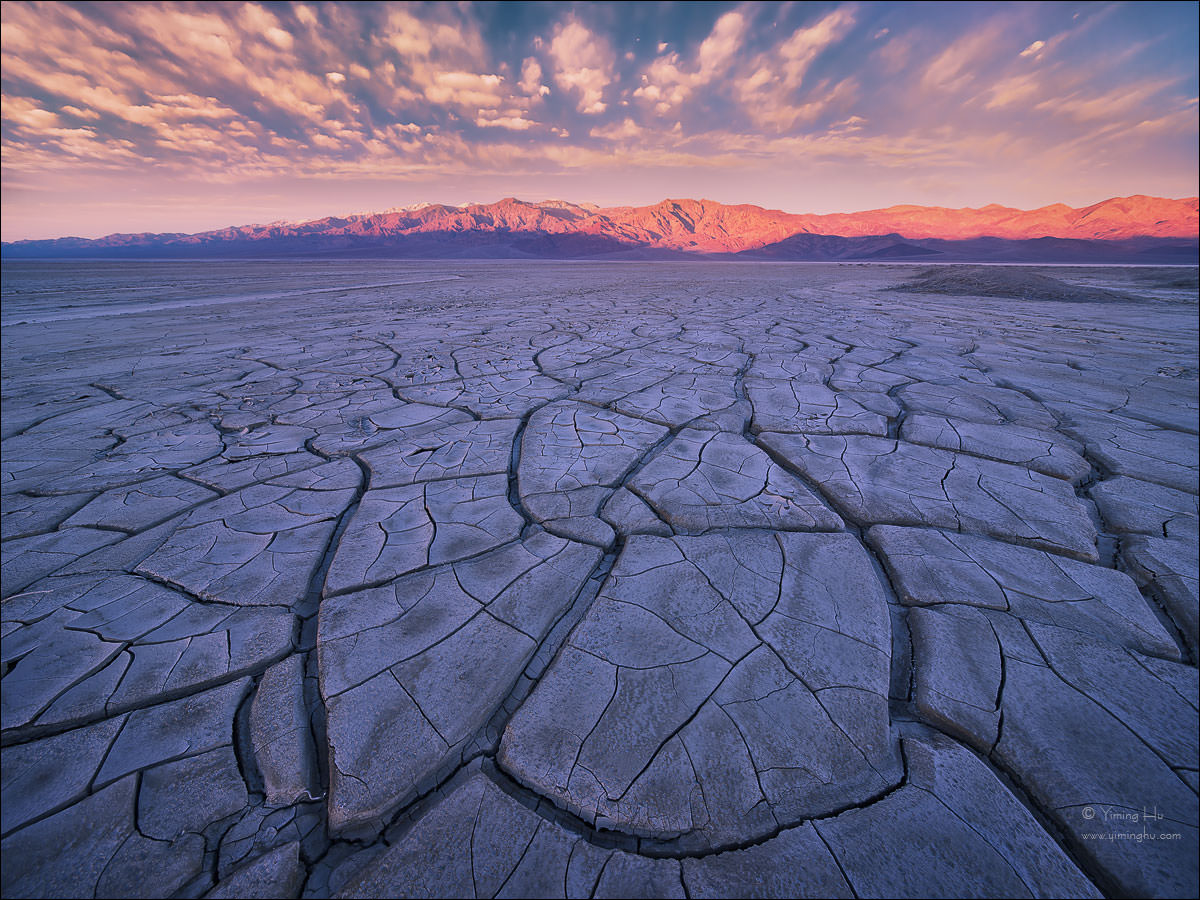
With forward tilt, I can capture foreground that is very close to the lens and mountains at infinity in a single shot at f/11. No focus stacking required.
On modern high-pixel-count systems, diffraction limits the smallest aperture one should use. On an IQ4 150MP, if you want the best image quality, it is usually best not to stop down beyond roughly f/10 to f/11. The problem is that landscape photography often requires depth of field that would seem to call for a much smaller aperture. Focus stacking can solve some of these problems, but in the field it is often easier and faster to use tilt or swing to place the plane of focus where it needs to be.
- Vertical Shift (Rise/Fall):
-
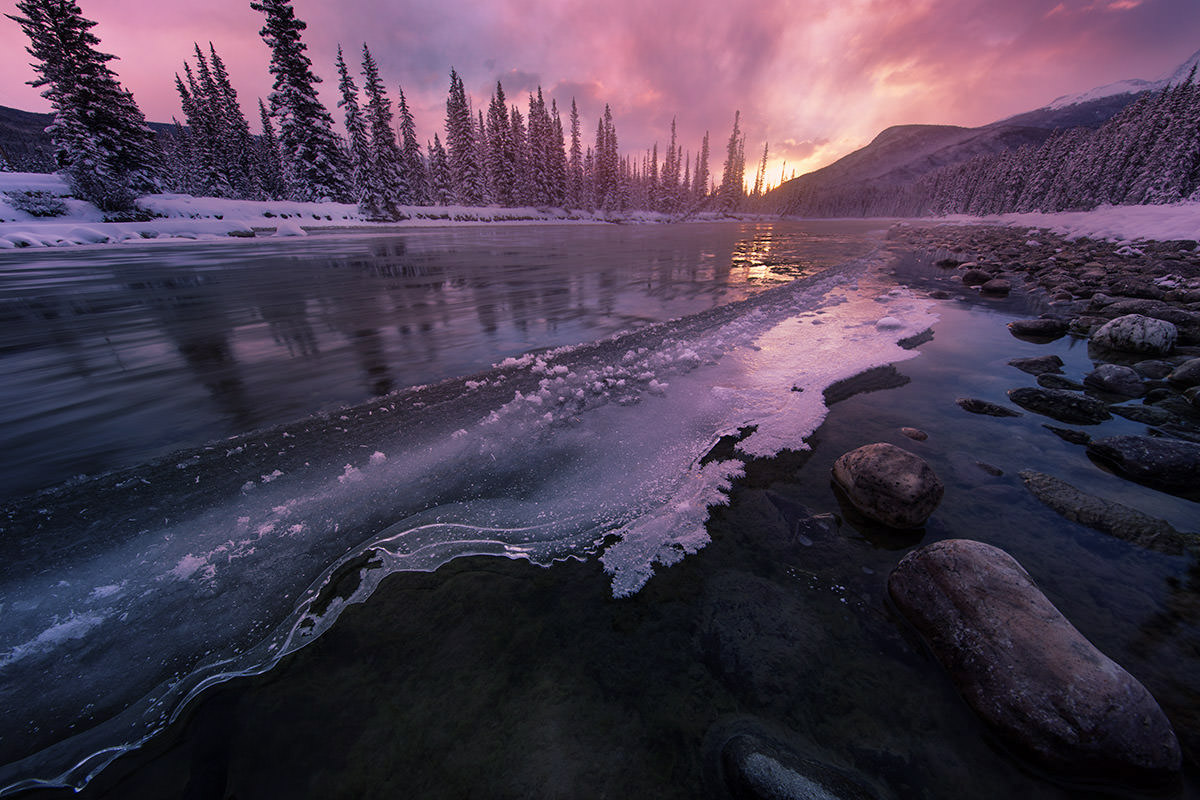
This type of vertical distortion, visible in the leaning trees and their reflections, is very common in 35mm wide-angle landscape photography. It can be avoided with vertical shift movements.
Vertical shift is used to avoid perspective distortion when photographing tall trees, mountains, cliffs, or architecture. Perspective distortion can be corrected in post, but doing so costs pixels and often changes the composition. With rise and fall movements, the camera can remain level while the framing is adjusted mechanically.
- Horizontal Shift:
-
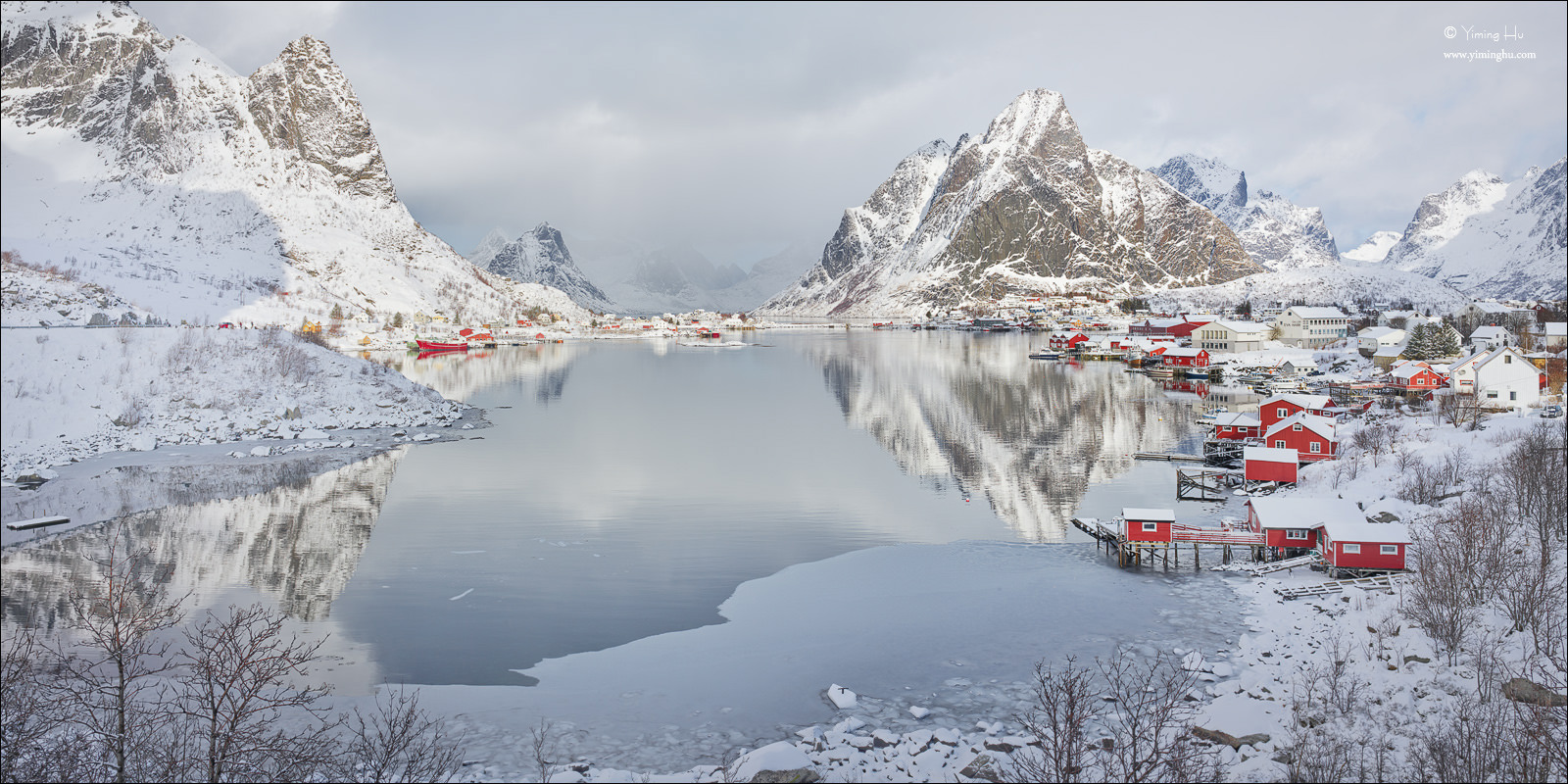
Horizontal shift makes it easy to create clean panoramas while also avoiding vertical distortion. This is the power of technical cameras.
Horizontal shift is extremely useful for creating distortion-free and parallax-free stitched images. Most of the time, we use stitching to create panoramas, but we can also use it to produce higher-resolution images with a more conventional aspect ratio. You can rotate a camera and stitch the images, of course, but the result is different. With shift stitching, the lens and sensor move relative to each other while the camera orientation remains fixed, which makes the stitched result cleaner and more controlled.
Technical Cameras
Enter technical cameras, the world of ALPA, Cambo, PhaseOne XT, ARCA-SWISS, and Linhof, etc.
Note: the term "technical cameras" was originally referred to almost any cameras with technical movement capabilities,
including view cameras. Recently, some people started to reserve the name "technical cameras" specifically to module-designed,
rigid-framed modern cameras such as ALPA and Cambo WRS, while using "view cameras" to describe traditional systems with bellows from Linhof, etc.
In essence, these rigid-framed cameras are nothing but some simple, interconnected thin metal frames. People often call them "pancake" designs.
Typically, there is one frame sliding horizontally and/or vertically inside another metal frame.
These are crazy-expensive but smartly designed and highly precise metal boxes! With the exception of PhaseOne XT,
all of them are purely mechanical devices, with no electronics or automation whatsoever.
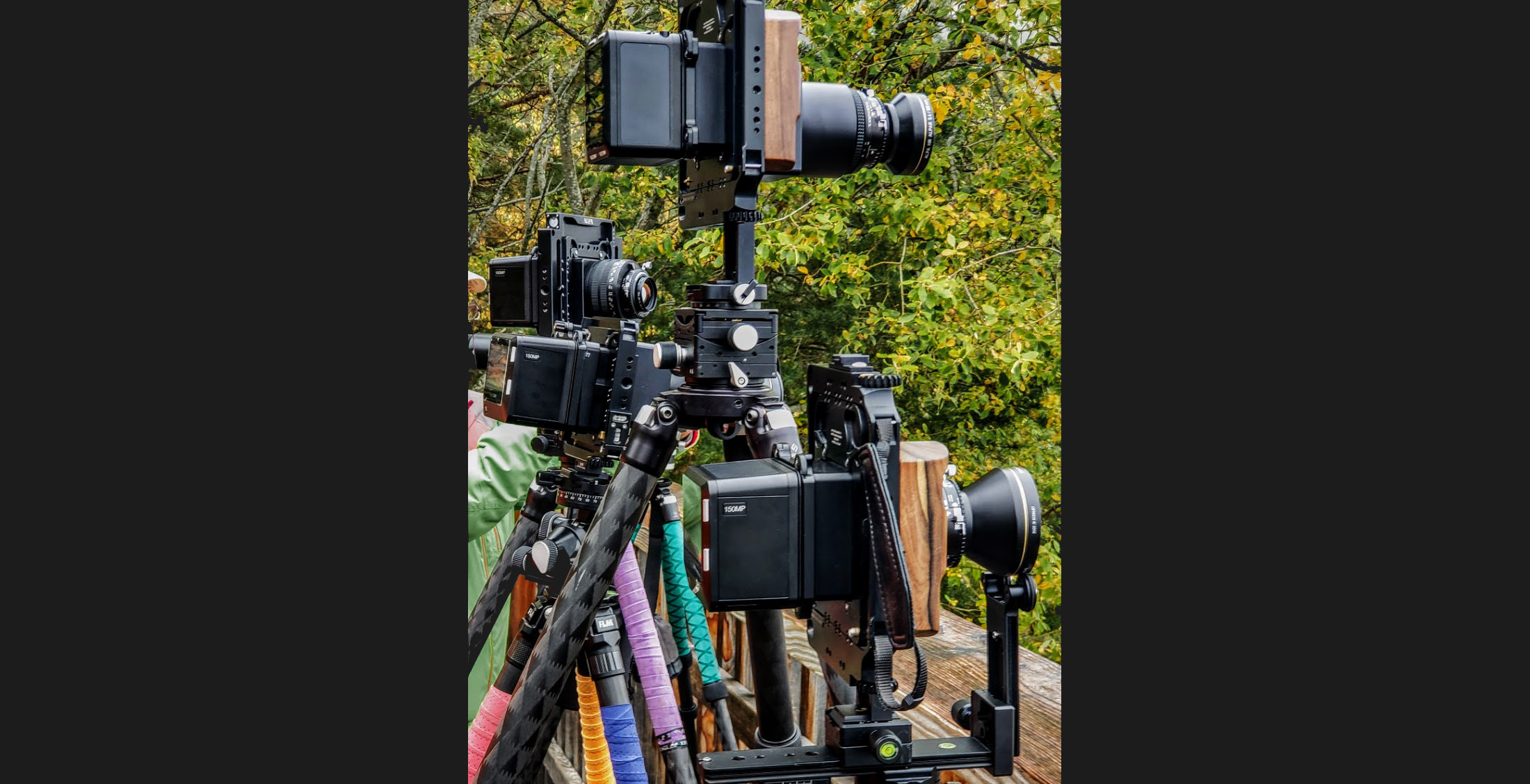
It is always fun to see many different types of medium format technical cameras,
particularly in a beautiful location such as in the Dolomites, Italy. Here my group brought eight technical camera systems,
among them were ALPA 12STC, ALPA 12MAX, ALPA 12Plus, ALPA 12Pano, and PhaseOne XT.
I did not choose Linhof or other cameras with bellows (e.g., Cambo ACTUS DB).
One advantage of such systems is that many of them are compact when using long lenses. Since you can freely extend the bellows, you do not need barrels for lenses.
These barrels, especially the ones for long lenses, take up a lot of space in my camera bag.
Bellows are flexible, so these systems also offer impressive capability of movements.
However, the bellows are generally quite fragile and tend to flap in the wind.
Moreover, they are much slower to set up and operate. Also, you need to use the live-view function of the digital back to focus,
which is very difficult or even impossible to do in the dark or at night. I saw my friends struggling with setting up then focusing in the dark for 30 minutes or more.
The only way they could focus was to use a high-power flashlight to illuminate some foreground,
so they could see something on the ground glass or the LCD screen of the digital back. By doing so, they completely ruined everyone else’s long exposures, but they are our friends, so no complaints were filed. Still, with all the troubles they often went home with some out-of-focused images, and I really feel sorry for them. I have also heard that people set up and focus their cameras during the daylight, leave their equipment in place overnight, and come back the next early morning so they could capture the beautiful dawn colors. As a landscape photographer, many of my images were taken under dim-light situations (during dawn/dusk, inside very dark ice caves, or in the middle of night ) in harsh weather conditions.
I need a different system. These bellows cameras are probably best for doing architecture photography in cities.
By contrast, with a pancake technical camera, I can take it out of my backpack, mount the lens,
turn the focal ring to infinite or the hyperfocal mark (for many Rodenstock lenses, it is 2-3 marks before the infinite),
and start shooting in less than one minute. And I often do this in the middle of night.
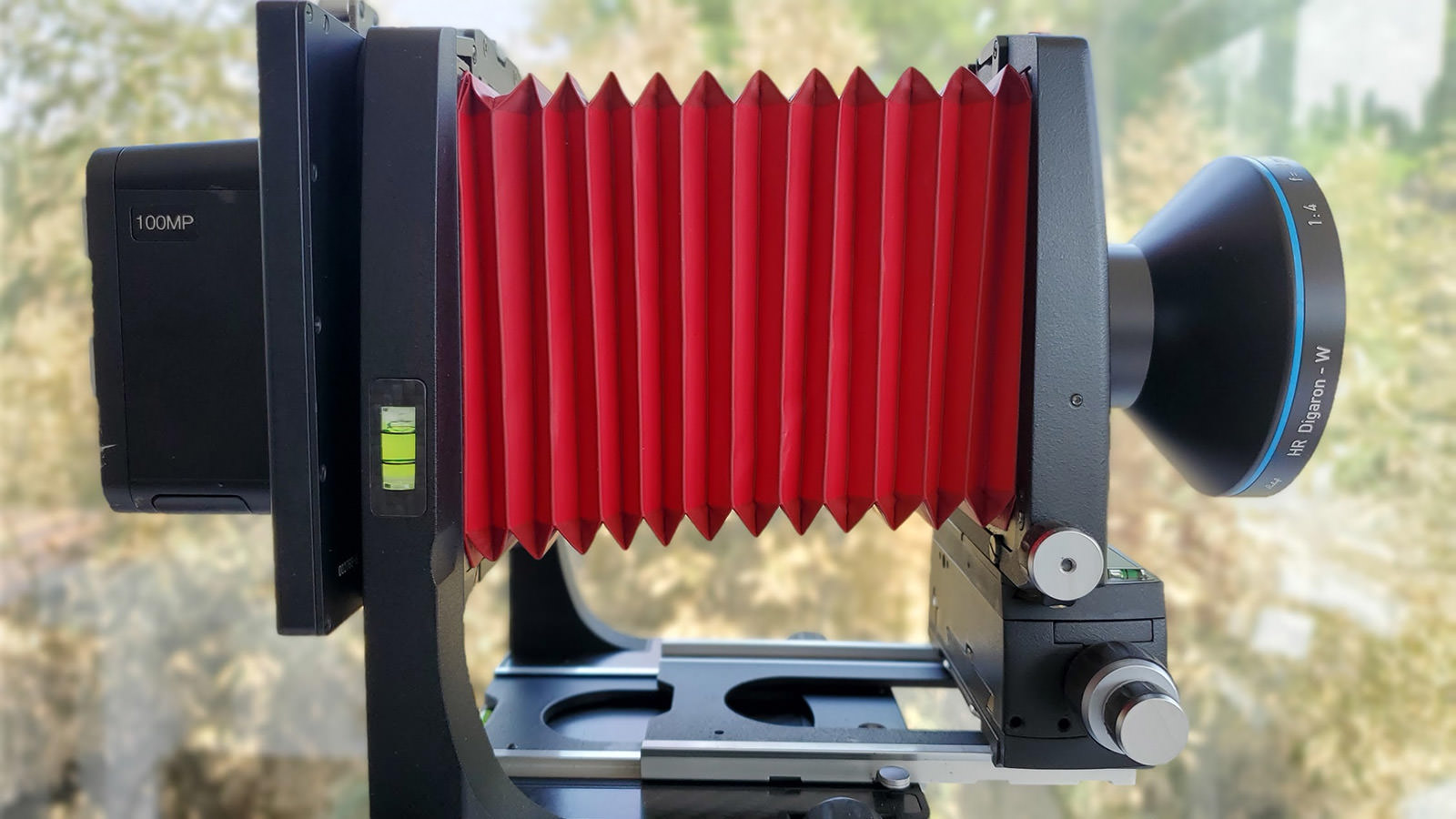
Linhof Techno Special Edition. What a beautiful piece of artwork! I was seriously contemplating getting one. In the end I knew that this camera was not for me. A friend of mine who mostly shoots architecture eventually acquired this beauty.
Who Are Making Technical Cameras?
In most markets, there are basically four MF technical camera systems to choose from:
- ALPA:
- ALPA offers complete MF body solutions: from the ultra-portable 12 TC/12 STC to heavy-weights 12 MAX and 12 PANO.
Many people own more than one of these bodies for different purposes. You can use almost any ALPA lenses on any ALPA body.
The engineering and build is absolutely fabulous. ALPA cameras are very expensive.
But, you can probably enjoy the legendary precision and durability for the rest of your life.
They are not perfect, as there is no such thing as a perfect product.
Most ALPA bodies can shift/rise/fall. To perform tilt, you need to add a tilt-adapter between the lens and body.
A few "long-barrel" lenses (explained later), notably the original HR 23mm lens, cannot be used in this way. Therefore, you cannot tilt the HR 23mm lens.
This is my biggest complaint about the otherwise most fantastic camera systems.
Update: ALPA now offers the HR Alpagon 23mm in an SB17 Aperture Unit version. With this newer short-barrel configuration,
the 17 mm spacer can be replaced by ALPA’s 17 mm tilt/swing adapter, making tilt or swing possible.
However, many photographers still own the older non-SB17 versions,
and the X-Shutter version is still listed as an LB configuration, so the original limitation remains relevant in practice.
ALPA's movements can be both geared (for precision) and slid (for speed), or both (depending on the model).
For geared movement, if you disengage the gear, you can slide the digital back or lens very quickly.
I like the speed of sliding movement. This is a big advantage when you perform pano-stitching for fast-moving clouds where literally every second counts.
There is something special about ALPA cameras. They look deceptively simple but are elegant and powerful.
They are more than just beautiful and are tools of precision. To quote from ALPA's website, "ALPA is not only a product but an attitude. An attitude of joy, professionalism, and the spirit of discovery." This is not a market slogan or a religion. You appreciate it once you use an ALPA camera for a while.
- Cambo's Wide RS Series:
-
Cambo's MF tech cameras are popular and capable. The build quality isn’t up to the standard of that of ALPA, but it’s adequate and at a much lower price point. There are two interesting features that I found useful. The first is that many of their lenses feature an integrated tilt and swing mechanism. The second is that the WRS-1600 has a unique feature "to rotate the full camera/lens/back assembly in the tripod mount between landscape and portrait mode within seconds, without removing any part and still keeping the optical center in the same position." (quoted from Cambo website). With an ALPA, you have to unmount the back, rotate it in your hand, and remount it. Every single time I have to rotate my digital back on my ALPA while standing in water or mud, I long for this feature.
- ARCA-SWISS R Series:
-
The essence of ALPA designs is "less is more", while ARCA-SWISS tries to present a complete solution.
This line consists of RM2D, RM3Di, and RL3D. The quality of ARCA-SWISS products is indisputably high.
All three can shift/rise/fall. RM2D does not tilt, while RM3Di and RL3D sport a built-in front-axis tilt mechanism of +/-5 Degrees.
As a result, you can tilt the HR 23mm lens. I have many, many friends who use ALPA cameras. I know only two people who use ARCA-SWISS.
Both are excellent systems, though. I am not sure about the exact reason why I don't see them more often.
I have heard some complaints about the difficulty of mounting lenses and other issues, but they are minor ones.
ARCA-SWISS products are excellent, but in my experience the system has been less visible in the field than ALPA or Cambo.
This may be due partly to distribution, documentation, and user-support ecosystems rather than optical or mechanical quality.
Some may argue that ARCA-SWISS C1 and D4 heads are popular among MF photographers.
However, this is a complete different story. There are very few competing products in the high-end geared head segment,
so ARCA-SWISS essentially enjoys a market monopoly.
- PhaseOne XT:
-
There’s a new kid in town! For years, Phase One has been making digital backs that are used on the bodies of other vendors such as ALPA.
They also make the XF camera, which is a digital MF SLR type, not a technical camera.
As I said before, the XF is mostly a studio camera for fashion/product/portrait types of work.
Architecture/landscape and other similar genres probably are best left for technical cameras.
Phase One later entered the MF technical-camera market with the XT camera, directly competing with established systems such as ALPA and Cambo.
The XT introduced some useful automation and integration features that had long been missing from the mostly mechanical MF technical-camera world.
XT is made by Cambo (so Phase One is collaborating with Cambo instead of competing with them).
XT can shift/rise/fall. The body and the native lenses do not tilt.
However you can use Cambo lenses (many of them come with built-in tilt mechanisms) on XT.
Of course you lose many new features by using these legacy lenses. I will discuss the XT in detail later.
For landscape photography in the wilderness, I chose ALPA for its compactness,
its unmatched precision and reliability, rigid design, fast operation, easy setup,
and unmatched service and technical support from my dealer.
With High Precision Focusing (HPF) rings mounted and calibrated on lenses,
one can perform precise focus in total darkness in a matter of seconds.
Contrary to popular belief,
I have found over and over that it is much easier to shoot starscapes with an ALPA than with a 35mm camera.
The movements on these rigid-framed cameras are somewhat limited compared to traditional view cameras with flexible bellows.
For example, you cannot perform tilt and swing at the same time.
However, for landscape work, it is almost a non-issue because such flexibility is seldom needed.
In the bitter winter of the Canadian Rockies, temperatures often drop to -40C (also -40F).
Weather resistant is paramount. Technical cameras perform well in such conditions. Through the years,
for all the people who have shot with me in different parts of the world,
only a couple of friends have ever brought a camera with bellows (for example, a Cambo ACTUS DB) with them.
It was hard to work with in many locations such as the infamously windy Patagonia.
Everyone else brought their rigid-framed systems, such as all types of ALPA bodies, Cambo WRS, ARCA-SWISS R, and recently the PhaseOne XT.
The Components of Medium Format Technical Cameras
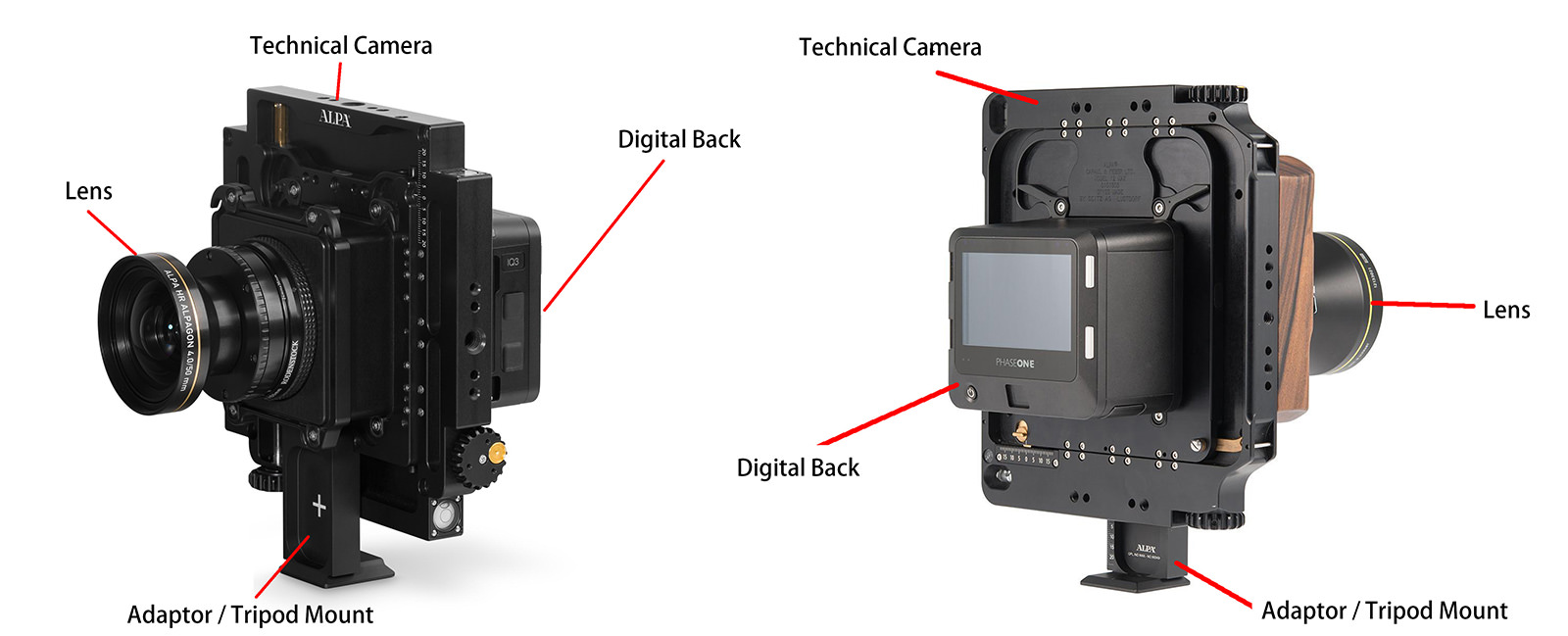
Front and back views of a typical technical camera system. The lenses, the camera body, and the digital back are typically stored separately in the camera bag. They are put together at the location.
Most technical cameras are open systems. The camera itself is just a metal frame connecting the lens and the sensor together. The sensor and the electronics exist in the form of digital backs. With a mounting adapter, you can mount digital backs from different manufacturers on the camera. Phase One makes the best digital backs, although typically you can mount the back from Hasselblad or other brands as well. Some systems even allow you to install another camera (such as a Hasselblad X or a 35mm Sony mirrorless) as the sensor.
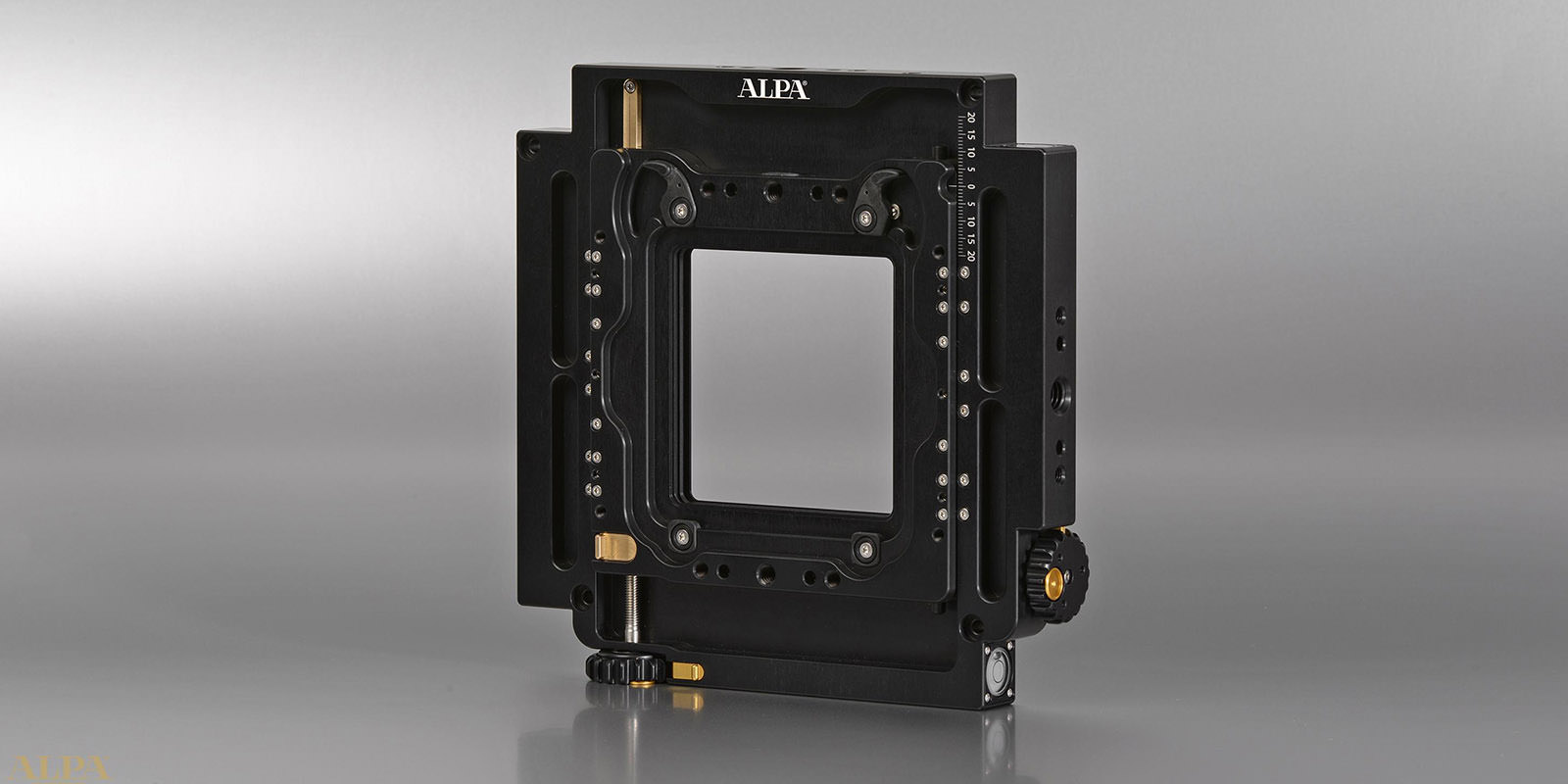
ALPA 12 Plus camera looks deceptively simple. It is just three metal frames - two of them move (rise/fall/shift) inside an outer frame.
As of this writing, the best lenses for technical cameras are made by Rodenstock. With the announcement of the Phase One IQ 4150 digital back that resolved some issues, some users have found that certain Schneider lenses are also an excellent choice. Note that lenses designed for different systems are typically not compatible. So if you have a Rodenstock HR 23 lens with Cambo mount or PhaseOne XT mount, you cannot use it on an ALPA. You’ll have to shell some serious money to buy the ALPA version.
Because of such incompatibility issues, switching systems is not an easy decision.
It seems that nobody wants to make an adapter so you can use lenses with different mounts. The market is too small and there is no incentive to do so. You can, however, send the lens to the manufacturer to modify it, for a significant fee (1000-5000 US dollars) of course. Phase One has just designed adapters so their own blue-ring lenses of their XF system, as well as lenses with Cambo mount, can be used on XT. This is welcome news and is understandable, as Cambo makes the XT and blue-ring lenses are their own products.
Finally, ALPA and some other vendors have made a Canon EF adapter, so users can use Canon Tilt/Shift lenses on a technical camera.